
Photovoltaic System in Jdeita
The Salloum Humanitarian Foundation’s Efforts to Facilitate Access to Clean Energy and Achieve Drinking Water Goals by 2030
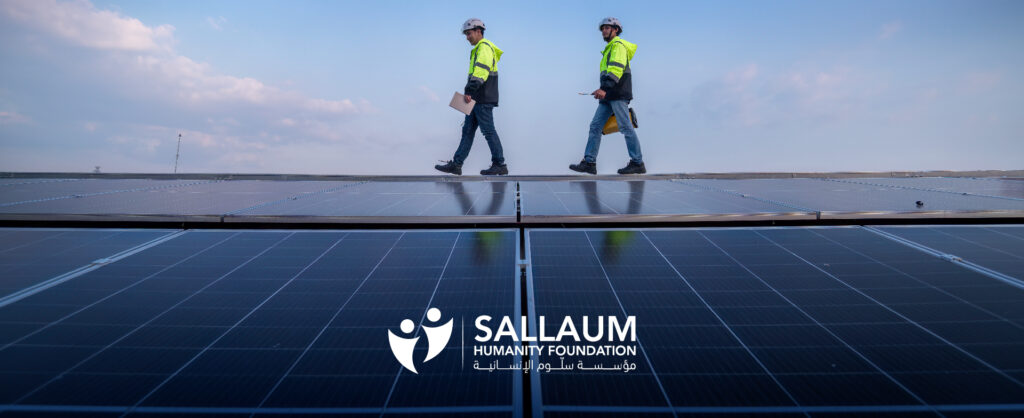
Through its social responsibility initiatives and in partnership with Salloum Lines Company, the Salloum Humanitarian Foundation constructed a solar power plant in the central Bekaa Valley. The plant consists of 420 solar panels, each with a capacity of 650 watts, and a 273-kilowatt solar power station. It pumps 4,500 cubic meters of water daily to power water wells, providing domestic water to over 120,000 beneficiaries.
The Bekaa Valley, located in central Lebanon, covers an area of 1,433 square kilometers. It has long been known as Lebanon’s breadbasket, a crossroads of civilizations, and a rich source of water. Since ancient times, the valley has been a wellspring of the region’s agricultural heritage and a vital trade gateway.
According to UNICEF, Lebanon’s public water infrastructure is “on life support” and could collapse at any moment, putting 71% of the population, or more than four million people, at risk of losing access to safe drinking water. In the Bekaa Valley, most households use a mix of water sources to meet their total water needs and pay three times the cost of public water supplies. Furthermore, the region suffers from shortages of drinking and irrigation water due to electricity shortages, which impact agriculture and the lives of all Bekaa residents.
For this reason, the Salloum Humanitarian Foundation and Salloum Lines partnered to address the water scarcity problem facing the Bekaa Valley by implementing one of the largest solar energy projects in Lebanon.
The solar power plant helps avoid the consumption of more than 256 tons of diesel fuel annually and more than 695 tons of carbon dioxide emissions. These positive outcomes contribute to a cleaner environment and benefit a large segment of the population and land in central Lebanon – making a significant contribution to combating climate change and its impacts, in line with Sustainable Development Goal 13.
